An execution device became the most loved symbol in human history. Here is what Catholics believe happened on Calvary, and why the Cross changed everything.
An execution device that became a symbol of hope
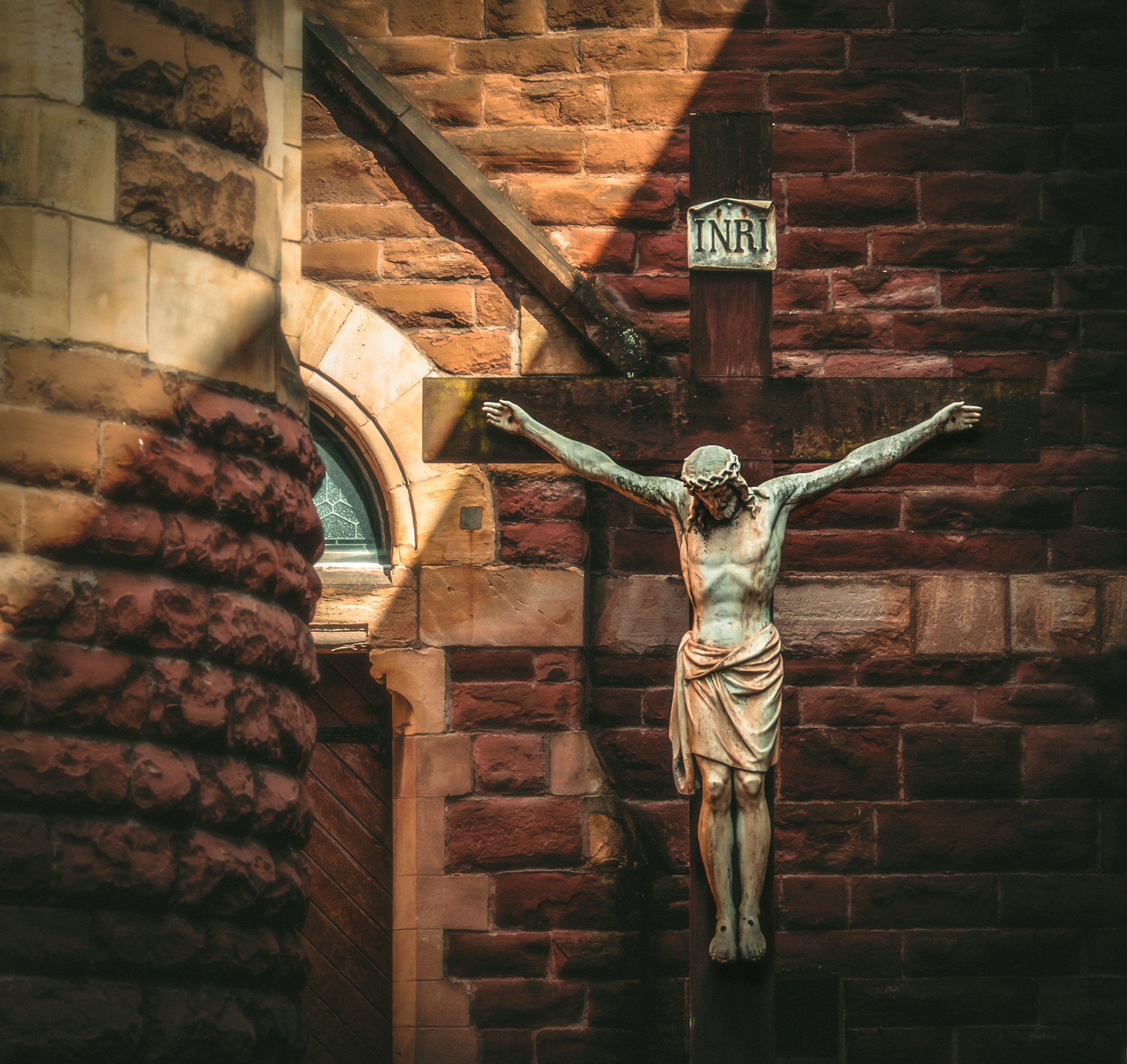
Crucifixion was designed to humiliate. The Romans reserved it for the lowest criminals and rebellious slaves, and they left the bodies on display so passers-by would get the message. No serious religion in the ancient world would build its centre of gravity around such an image. Yet within three centuries the Cross was the symbol of the Roman Empire. Within two thousand years it is the most recognised symbol in human history. Catholics do not venerate it as a reminder of a tragedy. They venerate it as the pivot on which the whole of history turned.
What the Church believes happened on Calvary
The Catechism is direct: The first man not only lost the grace with which he had been endowed; he also lost the holiness and justice in which he had been constituted (CCC 416). The Fall severed something in the relationship between God and humanity. Death entered the world. Sin became the condition of human life, not just a catalogue of individual failures but a wound in the nature of the thing.
What happened on Calvary was the answer to that wound. The Church teaches that three things occurred when Jesus died on the Cross.
- Atonement. The Son of God, who was without sin, took on himself the full weight of human sin and paid the price that justice required. He himself bore our sins in his body on the tree (1 Peter 2:24). The Father and the Son are one, so this was God's own act, his own answer to the debt we could never pay ourselves, carried willingly from within.
- Death was defeated. Jesus did not stay dead. The Resurrection is the Cross completing its work. Death had been the final word over every human life since Adam. On Easter Sunday it ceased to be the final word. Death is swallowed up in victory. O death, where is your sting? (1 Corinthians 15:54-55).
- The way back was opened.God so loved the world that he gave his only Son, that whoever believes in him should not perish but have eternal life (John 3:16). What the Cross opened is adoption into the life of God, participation in the divine nature (2 Peter 1:4), a destiny that was impossible before Calvary and far more than a second chance.
A Bishop at the balcony of St Peter's
On the evening of 8 May 2025, when Pope Leo XIV appeared on the balcony of St Peter's Basilica, the Cross was carried out before him. Bishop Mark Davies wrote a pastoral letter to the Diocese of Shrewsbury that evening. He described what he had seen:
It seemed significant that before we caught sight of our new Pope, we saw first the Cross of Christ carried onto the balcony of Saint Peter's. For the Pope always stands before the world as a witness to Christ and to the victory of His Cross.
That instinct, to look at the Cross first, before anything else, is deep in Catholic life. You see it at the front of every church. You see it in the Sign of the Cross with which Catholics begin every prayer. You see it in the Stations of the Cross walked by millions every Lent. Catholics believe the Cross is an ever-present event: what happened then reaches into the present moment because the one who died on it is alive.
What the Cross changes personally
If the Cross is true, three things follow for ordinary life.
- Guilt gives way. In the Catholic confessional, the forgiveness won on Calvary is applied personally and directly. No weight of the past is too heavy, because the one who bore it on the Cross bore it precisely for you.
- Suffering has a shape. Catholics do not claim the Cross makes suffering easy. They claim it makes suffering intelligible. The Son of God chose to go through it. He was not spared. That means when suffering comes, it comes with company: someone who has been there, who is not puzzled by it, who went through it freely and came out the other side.
- Death opens into life.I am the resurrection and the life. Whoever believes in me, though he die, yet shall he live (John 11:25). Catholics bury their dead with crosses on the coffin and prayers that they will share in the Resurrection, resting on the claim that the same power that raised Jesus from the dead on the third day will raise those who are united to him.
Where to find it
You can walk into Shrewsbury Cathedral on any day of the week. The address is Town Walls, Shrewsbury SY1 1UE. The Stations of the Cross are on the walls of the nave: fourteen scenes from Christ's final hours, from his condemnation to his burial. They are meant to be walked, slowly, one at a time. Many parishes across the diocese walk them together on the Fridays of Lent.
The Cross at the front of the Cathedral stands as witness to everything the building exists for. The rubric in the Mass says the priest venerates the altar, which holds relics of saints who died because they would not deny what the Cross means. The Cathedral was built in 1856 by people who had been told, for three centuries, that their faith was illegal. They built it because they believed the Cross had changed everything, and nothing that could be done to them had changed that.
Your next step
Read Isaiah 53 in the Old Testament: He was pierced for our transgressions, he was crushed for our iniquities (Isaiah 53:5). Then read it alongside the account of the Crucifixion in John 19. Isaiah was written seven centuries before Christ. Ask yourself whether the correspondence is accidental.
Then come to a Good Friday liturgy at your local parish, or at Shrewsbury Cathedral, and stay for the Veneration of the Cross. You will see Catholics come forward one by one and kneel. They are acknowledging what happened there, and who was on it, rather than worshipping a piece of wood.
Key Contacts

.jpeg)