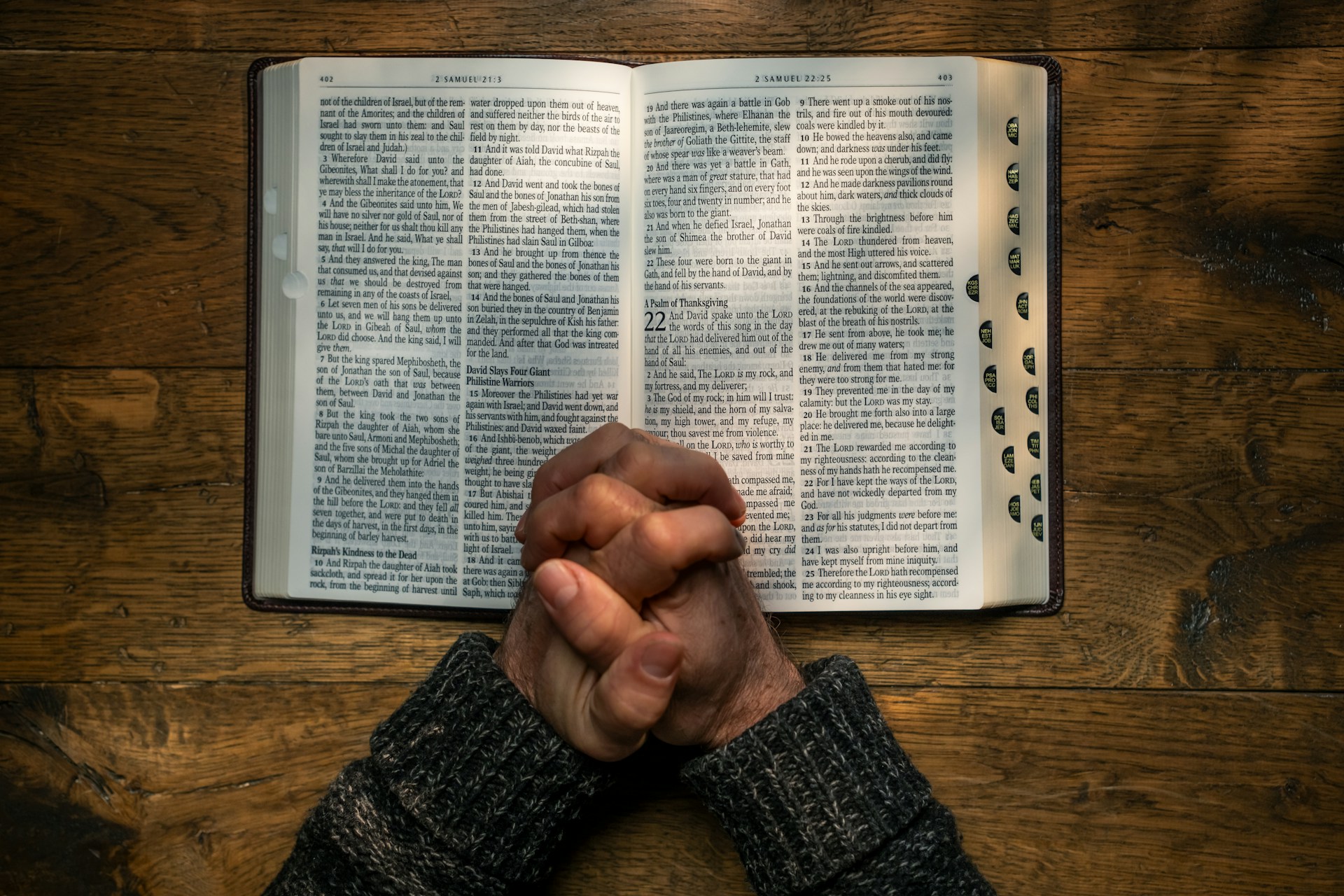
The Ignatian Examen in five steps. A five-minute nightly prayer that turns ordinary days into ongoing conversion, the heart of the Christian life.
Five minutes that work on you for years
The Examen is a short evening prayer Saint Ignatius of Loyola gave the Church almost five hundred years ago. He thought it was the single most important habit in his Society of Jesus, more important than long meditation. Five minutes, every night, in five small steps. A prayer the busiest person can keep, and a prayer that quietly does what years of self-help books do not.
It is also a Shrewsbury prayer, in a quiet way. The Discernment Year for men considering the priesthood, run between St Joseph's Stockport and Shrewsbury Cathedral, is built on this kind of structured daily prayer. The men in formation for the priesthood in our diocese pray something like this every night, and the practice is open to anyone.
Why the Examen?
Bishop Davies returns again and again to a single theme: ongoing conversion.
It is by striving to live our own conversion that we can best support a new generation of converts. For Lent calls us to recognise that every member of the Church must always be a convert.
Pastoral Letter for Lent 2026.
Conversion is a daily reorientation of the heart toward Christ. The Examen is the tool the Church gives us for that daily reorientation. Without it, our days run past us unnoticed. With it, we begin to recognise where God is at work in our lives, and where we keep stepping past him.
The five steps
Sit somewhere quiet. Light a candle if you can. Make the sign of the cross. Then walk through these five steps, in order.
- Give thanks. Ask God to bring to mind the gifts of the day, large and small. A conversation, a meal, a moment of beauty, good news from a friend. Name one and thank him for it.
- Ask for light. Ask the Holy Spirit to show you the day clearly, without self-deception or false modesty.
- Review the day. Walk back through the hours from waking to now. Where were you most alive, most yourself, most at peace? Where did you feel drained, irritable, or flat?
- Face what needs facing. Where did you fall short? Where were you unkind, dishonest, lazy, or absent? Acknowledge it plainly, without excuse. Ask for forgiveness.
- Look forward. Ask God what tomorrow needs from you. Make one small resolution, specific and achievable. End with the Our Father.
End with a sign of the cross.
What changes
For the first week, almost nothing. You will feel like you are listing things. By the second or third week, the prayer begins to walk around with you during the day. You catch yourself in the moment before the sharp word. You see the gift while it is happening. You start to recognise patterns: the times of day you are most fragile, the people who bring out the worst, the situations where God keeps offering grace and you keep rushing past it.
That is the prayer doing its work. The Catechism speaks of conversion as a continuous task for the whole Church (CCC 1428). The Examen makes that task concrete in a single evening.
Common questions
This is the rhythm Bishop Davies keeps describing for our whole diocese in this 175th year: keep returning, keep beginning again, keep asking the Lord to make you new. Five minutes each evening is the small hinge on which the larger door of conversion swings.
Your next step tonight
Try the Examen tonight, before bed, sitting up. Five minutes. Five steps. Use the framework above.
The Examen is small. That is its strength. Five minutes, five steps, repeated each night, is the structure it needs to work.
Key Contacts