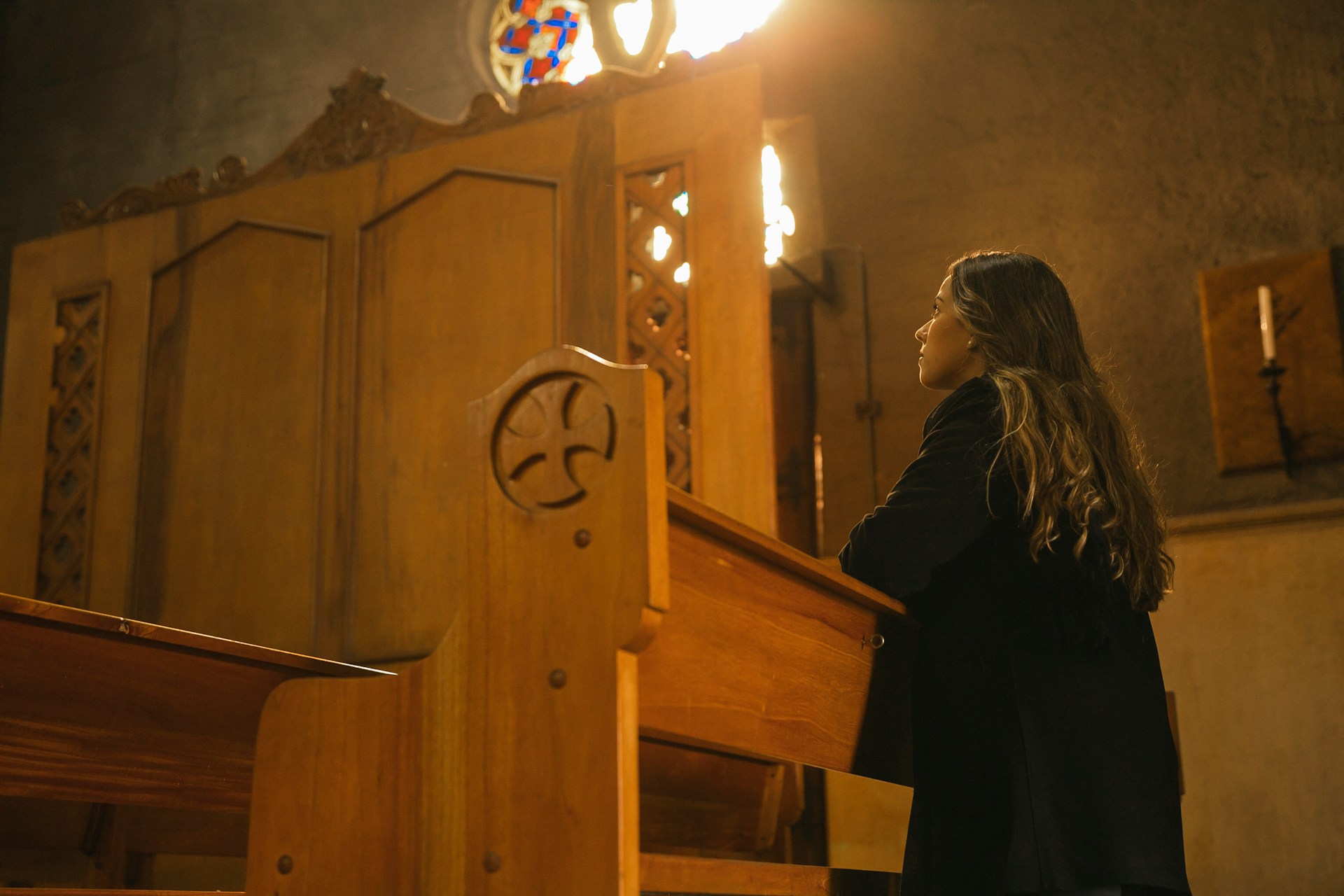
The single life is a positive Catholic vocation, not a waiting room. How single Catholics in the Diocese of Shrewsbury can live deeply, prayerfully, and generously.
Not a waiting room
The single life is one of the genuine Christian vocations. Single Catholics, lay men and lay women living chastely in the world without vows or sacramental marriage, are a real and important part of how the Church lives. The Diocese of Shrewsbury wants to say that out loud, because the silence around the single life has done damage. It is a vocation in its own right, held open to the Lord, and not simply a season of waiting for something else to begin.
Bishop Mark Davies framed the lay vocation in his 2026 Pastoral Letter with words that apply directly to the single Christian:
"Today, I want to join Pope Leo in inviting all considering their calling to take these steps to discover their vocation, whether this will be found in Christian Marriage; the Consecrated Life of Sisters or Brothers; the Catholic Priesthood; the service of the Diaconate; or the greatness of the lay vocation lived in the midst of the world."
"The greatness of the lay vocation lived in the midst of the world." Read that line slowly. The lay single Catholic is part of that greatness, not a footnote to it. The Bishop's vision for the diocese includes single people who are praying daily, serving generously, and giving the witness of a chaste life lived in joy.
Pope John Paul II spoke of the single life as a state of life with its own dignity and its own gift. Saint Paul, in 1 Corinthians 7:32-35, framed the single life with characteristic clarity: "I want you to be free from anxieties. The unmarried man is anxious about the things of the Lord, how to please the Lord. ... I say this for your own benefit, not to lay any restraint upon you, but to promote good order and to secure your undivided devotion to the Lord." Single life is differently shaped to the same end as other vocations, and no less than them.
Two kinds of single life
The Church recognises two distinct shapes of single life as vocations.
Consecrated singleness
Some single people make a public, recognised commitment to celibate love of Christ outside of religious community. The classical form is the Order of Virgins, an ancient order restored after Vatican II, in which a woman is consecrated by the Bishop to perpetual virginity for the sake of the Kingdom. There is also the rite of Consecrated Widowhood, and a number of secular institutes in which laypeople take private vows and live the evangelical counsels in the world while keeping their ordinary work and homes.
These are real, recognised vocations. They are rarer than marriage or religious life, and they are usually entered after years of testing with a spiritual director and the Bishop.
Lay singleness
Most single Catholics are baptised laypeople who, for one reason or another, are not married, rather than members of a consecrated state. Some are young. Some have lost a spouse. Some have remained single by circumstance. Some have made a quiet commitment to remain single for the Lord.
The Church holds lay singleness as a state of life that can carry real holiness. The single Christian has freedoms that other states of life do not. Time, mobility, and energy are not divided between spouse and children. They can be given to prayer, parish, the poor, scholarship, and mission. Each of these is a real and full path to heaven.
What scripture says
Saint Paul addresses singleness directly in 1 Corinthians 7. He neither commands it nor denigrates marriage. He argues that the single Christian can give an undivided heart to the Lord (1 Corinthians 7:32-35). Christ himself was unmarried. So was John the Baptist. The unmarried life of love runs through the Christian story.
The risks to name honestly
Single life has risks that need naming.
- Drift. Without the structure of spouse and children, the day can be shapeless. A rule of life, with fixed times of prayer, fixed Mass attendance, and a fixed weekly examen, is essential.
- Isolation. The Church is a family. The single Christian needs to be in the parish, not just at it. Volunteer. Eat with people. Open your home.
- Self-pity. The temptation to view singleness as a problem to be solved by another person rather than a state to be lived for the Lord.
What single life makes possible in Shrewsbury
A single Catholic in this Diocese has a particular set of gifts to offer. The 12 men in priestly formation will need lay friends and supporters. The Marriage and Family Life Office runs programmes that depend on lay volunteers, married and single. The schools, the chaplaincies, the parish councils, and the safeguarding work all need single people with time to give. St Joseph's, Stockport, the Diocesan Eucharistic Shrine of Perpetual Adoration, runs because hours of adoration are kept by ordinary lay Catholics, many of them single.
The Bishop has often said that decline in numbers does not change the Church's mission, only its shape. The single Christian has a part to play in that shape.
Discernment if you are single
If you are single, the question of vocation is still alive. Some single Catholics are discerning marriage or religious life and the answer simply has not arrived yet. Others are discerning whether the Lord wants the single life itself to be the answer. Both questions are worth taking seriously.
If you are single and asking what your vocation is, hold three questions.
- Am I open to marriage if the Lord brings the right person, and have I taken the practical steps to make that meeting possible?
- Am I open to the priesthood, the diaconate, or consecrated life, and have I let myself look at those paths honestly?
- Am I living the life I have now as a vocation, with a real rule of prayer, real service in the parish, real friendship, and real chastity?
If the answer to all three is yes, you are not waiting. You are already living a Christian vocation.
Your next step
The most useful step is a spiritual director. The director will help you see whether your singleness is a season, a long road, or a positive call. They will help you stop performing for an unseen audience and start living the actual life God has given you.
- Pick a fixed time and place of prayer this week and keep it.
- Volunteer for one regular thing in your parish this month.
- Ask your parish priest about a spiritual director. If your parish does not have an obvious option, contact the Vocations Office using the details below and ask for suggestions of directors familiar with lay vocations in the diocese.
- If you sense a deeper call toward consecrated single life, write to the Bishop's Office at the Curial Offices and address your enquiry to Bishop Davies. The contact is listed below.
The vocation is the life you are already living, taken seriously.
Key Contacts